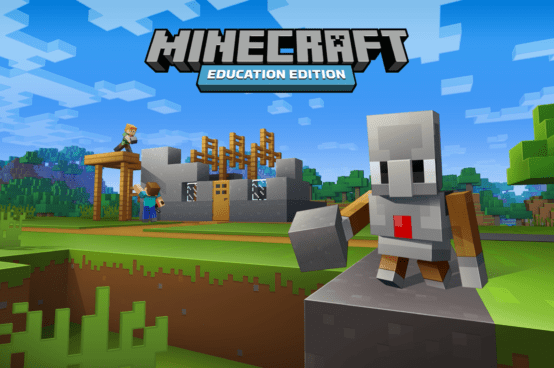
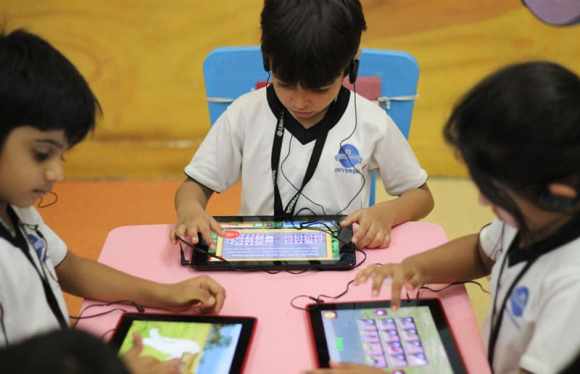
The classroom is forever changing and growing to meet the learning needs of students. the use of games in education can be viewed as an interface to learning. However, when these games are designed and utilized for pedagogical purposes, they are a useful tool for improving the effectiveness of learning at all levels of education (Manesis, 2020). Technology in the classroom in implemented to simplify and improve educational outcomes through higher levels of engagement and motivation.
Games can be used as a support tool alongside traditional teacher practices to improve a learning experience. The use of games in educational settings is said to improve critical thinking skills, creativity, teamwork and sportsman ship (Zirawaga, 2017). There is a growing interest towards the use of games in a learning environment, however, the integration of these games needs to be looked into in more depth (Kangas, et al,2017).

Scratch
Scratch is a coding-based learning tool that provides users with the opportunity to create their own interactive stories, animations and games. Scratch is growing in popularity as many educational institutions are realizing the potential scratch has on project-based learning across many subject areas and year levels.
Scratch can foster creativity due to the range of possibilities for design. Students are required to discover, interpret, think of an idea, experiment, and evolve on a design. Scratch enables students to continuously problem solve and experiment (Squire, 2006).
Just like many other technologies, students and teachers will both need to be trained to use Scratch. Teachers may not be able to monitor all students using Scratch. This can result in students getting off topic or falling behind.
References
Kangas, M., Koskinen, A., & Krokfors, L. (2017). A qualitative literature review of educational games in the classroom: the teacher’s pedagogical activities. Teachers and Teaching, 23(4), 451-470.
Mayer, R. E. (2019). Computer games in education. Annual review of psychology, 70, 531-549.
Squire, K. (2006). From content to context: videogames as designed experience. Educational Researcher, 35(8), 19-29
 EDUC3620
2 replies on “Digital Games and Design”
Hi, Austyn,
I enjoy reading your blog post. I agree with you that the digital game can be a supporting tool in teaching and learning. Also, I believe the Scratch is a useful coding-based learning tool to foster students’ creativities after some training of how to use it.
Comparing with Scratch, is there any other digital game that can support teaching and learning?
Overall, it is a good post, Thank you for sharing!
LikeLike
Hi Austyn,
Thank you for putting together a very informative and easy to read blog on using digital games and design for teaching purposes. Scratch is a fantastic tool to promote student learning in aspects of coding fundamentals and basic game design.
One of my favourite aspects of the Scratch tool, is the heavy scaffolding of the features of the tool through the tutorials presented on the website. Not only does this benefit the student learning to use the software, it also provides the educator with an understanding a simple to follow instructions to support their lesson planning. There is also presented on their website for free a plethora of community designs for students to break down and further develop their understanding of the coding aspects of Scratch to create new pathways in their knowledge of the software.
Thank you for read and best wishes for your teaching future.
– Chris
LikeLike