What are MakerSpaces?
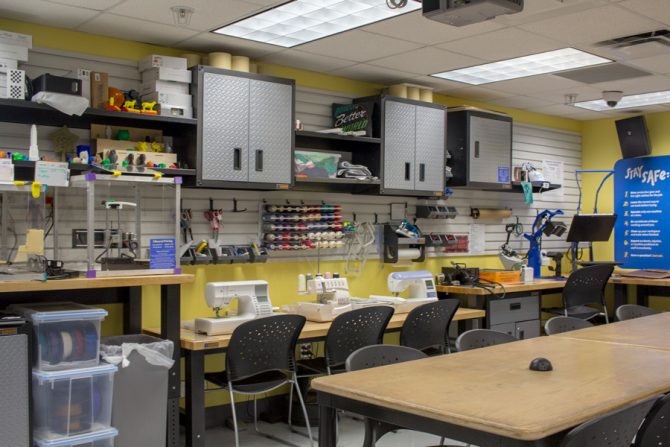
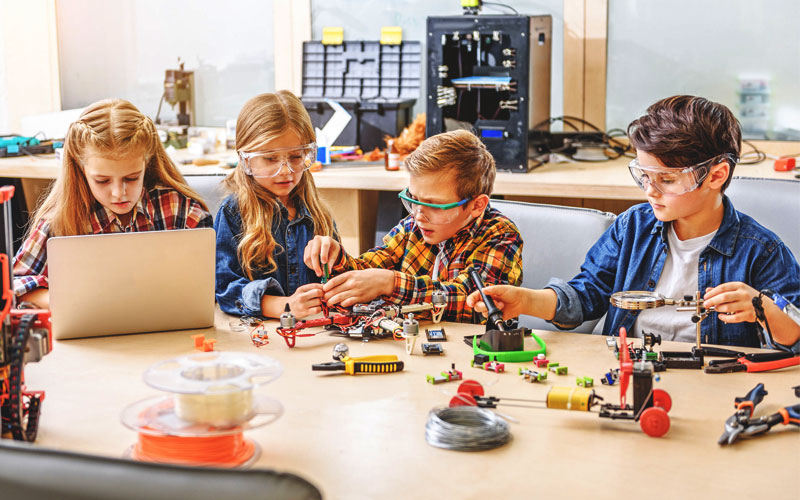
Makerspaces are environments where individuals use technologies to make physical artifacts within a community of fellow Makers (Hira & Hynes, 2018). Makerspaces are for individuals to merge digital and physical technologies to explore, learn and create. These spaces can be found in many schools as they are a key component of a larger maker movement (Sheridan et al., 2014). Makerspaces and the activities they support have gained a lot of interest from educational institutions over recent years.
Despite an increase in interest around makerspaces, there is little research suggesting the educational benefits (Sheridan et al., 2014). However, the research that has been conducted is promising. Presenting that when individuals learn in a makerspace, a sense of community and self-directed participation occurs (Sheridan et al., 2014).
The following are examples of technologies that can be found in a makerspace.
3D Printing
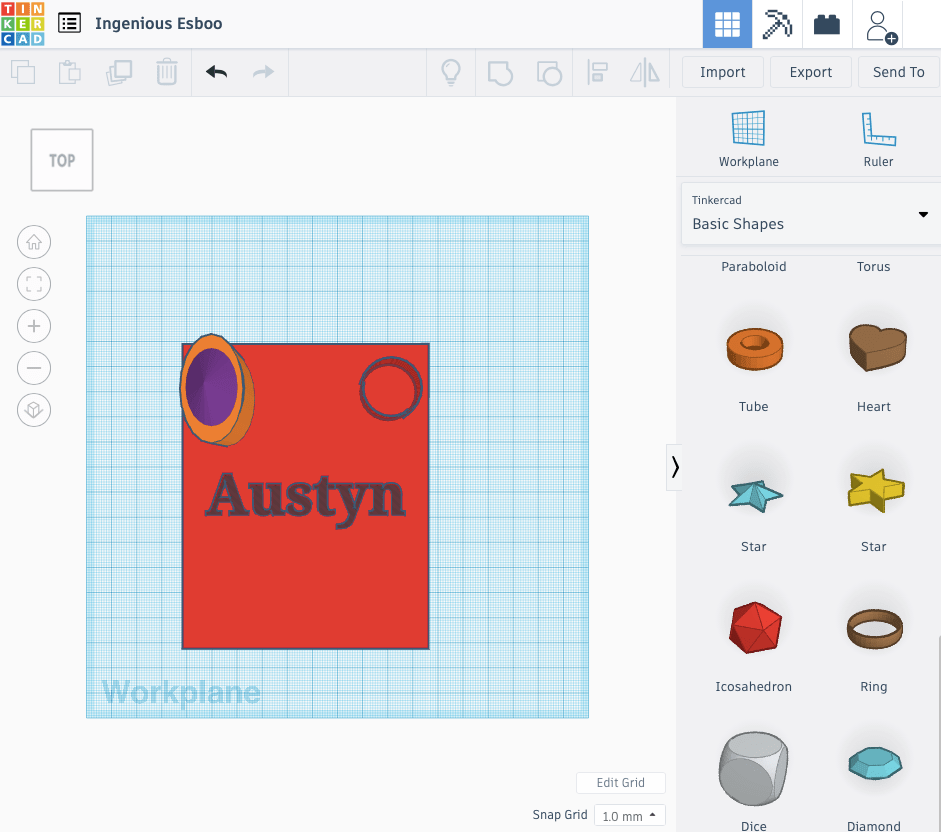
Tinkercad is a free software that enables individuals to create 3D dimensional models that can be printed. The software is easy to navigate and child friendly. 3D printing can be use in a variety of subject strands

Computational Thinking
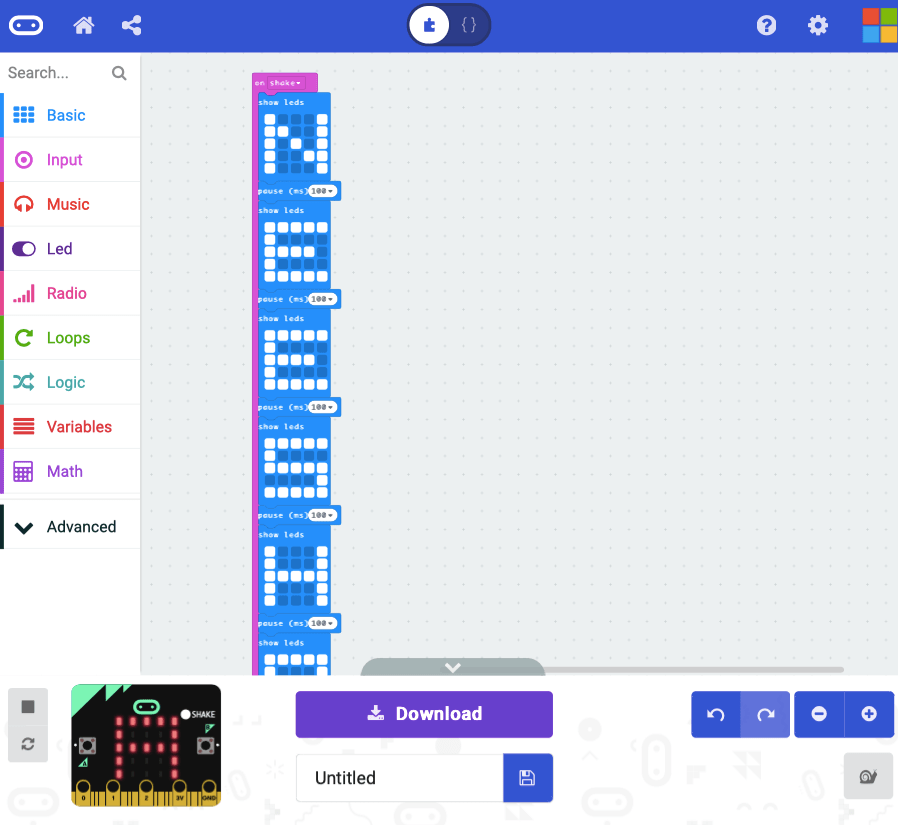
Micro-bit allows for students to explore coding through a pocket-sized computer chip. This chip has 25 LED lights that display information when coded correctly. There are other similar designs to the Micro-bit, such as: Rasberry Pi and Intel Galileo.

Potential Issues with Makerspaces
In makerspaces, there is the potential issue for diversity and inclusion. The dominant ‘Maker’ culture is said to be white, masculine and technocentric (Hira & Hynes, 2018). It is the educators job to create lessons that consider all individuals and not favour masculinity.
References
Hira, A., & Hynes, M. (2018). People, Means, and Activities: A Conceptual Framework for Realizing the Educational Potential of Makerspaces. Education Research International, 2018, 1-10. https://doi.org/10.1155/2018/6923617
Sheridan, K., Halverson, E., Litts, B., Brahms, L., Jacobs-Priebe, L., & Owens, T. (2014). Learning in the Making: A Comparative Case Study of Three Makerspaces. Harvard Educational Review, 84(4), 505-531. https://doi.org/10.17763/haer.84.4.brr34733723j648u
 EDUC3620